The Engineering Behind Singer’s Legendary Durability

The Engineering Behind Singer’s Legendary Durability

Few household machines have earned the kind of loyalty that old Singer sewing machines command. Decades after they left the factory, these machines are still stitching daily in sewing rooms around the world. If you want proof, look at a well-kept lineup of working Singer sewing machines that are still earning their keep rather than gathering dust.

That longevity is not an accident. It is the result of deliberate engineering choices that prioritized strength, serviceability, and simplicity over disposability — choices documented in detail by collectors at sites such as https://www.nadelfrau.com/. Understanding those choices explains why a Singer from the 1930s can outlast a machine built this year.

A Foundation of Cast Iron

At the heart of every classic Singer is a cast-iron body. This dense, rigid frame absorbs vibration and keeps the moving parts in precise alignment. When the needle bar, feed dogs, and hook all stay perfectly timed, the result is an even stitch and smooth operation — year after year. Lighter machines flex under load, which throws off timing and shortens their working life.

Metal Gears and Direct Mechanics

Inside, the gears and linkages were machined from steel. There were no plastic cams waiting to crack. Power moved from the motor or treadle through a straightforward mechanical path, which meant fewer points of failure and easier diagnosis when something did go wrong.

  • Steel gears resist stripping even under heavy fabric loads.
  • Mechanical timing can be re-set rather than replaced.
  • Motors are frequently rebuildable, not throwaway units.
  • Few electronics means fewer catastrophic failures.

Designed to Be Maintained

Perhaps the most forward-thinking choice was making these machines easy to care for. Oiling ports were placed where owners could reach them. Faceplates came off with a single screw. Bobbin cases lifted out for cleaning. Singer assumed the owner would be an active participant in the machine’s upkeep, and they documented everything in clear, illustrated manuals. This philosophy is the opposite of much modern manufacturing, where sealed housings push owners toward replacement rather than repair.

Models That Set the Standard

Certain models became legends. The Featherweight 221 earned a devoted following among quilters for its portability and flawless straight stitch. The 15-91 and 201 built reputations as workhorses capable of sewing almost anything. The 66, with its distinctive Red Eye decals, became a fixture in homes across the country. Each represents a slightly different answer to the same question: how do you build a machine that lasts?

Why It Still Matters Today

In an age of planned obsolescence, these machines are a quiet rebuttal. They remind us that durable goods can be repaired, shared, and passed down. For quilters and sewers, that durability translates into real value: a dependable tool that will not quit in the middle of a project and will not become e-waste in a few years.

Buying one does require a little homework. Inspect the machine for smooth handwheel movement, check that the motor runs without smoking, and confirm that the bobbin and attachments are present. Prices vary widely based on model, condition, and completeness, so compare recently sold listings before committing. For anyone drawn to the craftsmanship of an earlier era, the takeaway is simple: Singer engineered these machines to endure, and endure they have.
Crayon Quilts

No Comments

Blog

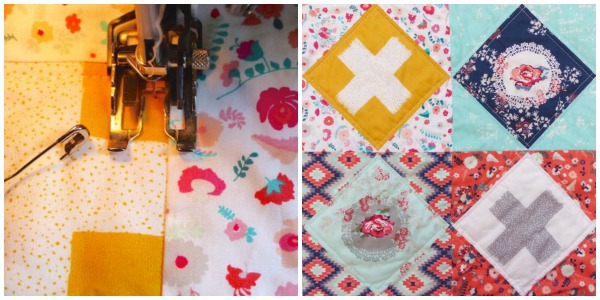
Want your gift to be a hit on Mother’s Day or Christmas? Have the little ones draw pictures as blocks with crayon quilts. Add Sashing. Present. Done. The receiver will have an original work of art that they will treasure.

So, there you have some ideas for creating your own memory quilt. Use one, two or all of the suggestions. The best thing about this type of quilt is that it is unique. And isn’t that a reason why we quilt, anyway? To create something unique.quilting

Nine Patch Quilt Block – How to Make and How to Use

A nine patch quilt block is just about the easiest block you can make. It also has the benefit of being one of the most versatile. So, what is it and how can you use it to turn your scraps into something beautiful? Let’s find out.

What Is It?

It’s really very simple. A nine patch quilt block is made up of nine parts. These can be the same size or not. What makes the block is the contrast in values between the sections.

They will usually have light and dark value. Now, these nine sections can have all the same color like when you’re quilting a basic Irish Chain or they can have a variety of colors like the Puss in Boots block.

How to Make It

Strip Piecing is your best bet. For a standard 9 patch if you want a 6-inch block, you’ll need to cut out 3 – 2.5 inch strips of your dark or bright fabrics and 3 – 2.5 inch strips of your light fabric. Create 2 strip sets:

Dark-Light-Dark and Light-Dark-Light

Cut the strip sets 2.5-inches times the width of the fabric. Sew them in sets of the following ways to create your block:

Dark-Light-Dark

Light-Dark-Light

Dark-Light –Dark

How to Use it:

Alternate with plain blocks

As mentioned above, you can create a basic Irish chain quilt. That is if you alternate it with a block of the background fabric. The main color pop and it looks like there’s a chain. Another option is just to alternate the block with a plain block of the same size.

Alternate with Half-Square Triangles

This is something really simple that can pack a punch. First, look in your stash to see what you have a lot of. It should be a dark color and a light color. Make half-square triangle blocks. Then make 9 patch quilt blocks that coordinate with these colors. It works best if they fall between the color ranges and are in the same color family. By the same family I mean brights, country colors, Civil War reproductions, that kind of thing.

You do not need the same fabric line, but you do need the same color family. You will notice that you gravitate toward a certain type of fabric and this will not be a problem.

More Information about Quilting and Singer Sewing Machines

How many people in your town wear t-shirts

No Comments

Blog

How many people in your town wear t-shirts? Hundreds? Thousands? Millions? EVERYBODY? T-shirts are probably the most popular item of clothing in the world, and this has to be because of these sheer variety of styles and designs. When somebody sees a t-shirt they like, they buy it! But what if you could decide have anything you like printed onto a t-shirt? Wouldn’t that be cool? Well, a lot of people agree that personalised clothing is a very cool thing to have – but it’s so difficult to find a store where you can get your own personalised clothing!Core Media San Antonio

It’s this very thought that inspired me to start my own t-shirt printing shop in Worcester, England. At my shop here my staff and I print t-shirts, hoodies and sweaters for all types of customers. They come in, tell us what they want, and we design and print it for them right there and then. They love it because what they are buying is completely unique, and we love it because it’s incredibly satisfying to see our customers leave with a smile on their face. But more importantly than this, it makes MONEY, and it’s SO EASY!

Here’s how I do it…
When I started out, I bought some very cheap t-shirt printing equipment on eBay. All I had was a vinyl cutter, a heat press, and a few blank t-shirts. I created a few designs, built a free website and used Paypal to accept payments. Within days I had sold my first t-shirt. On my website I was also offering a “create your own t-shirt” service where people could have any message they wanted printed onto a t-shirt – this is the side of the business that really took off.

Vinyl cutter for creating designs to print onto t-shirts

Popularity grew as people shared links to my site on Facebook, and I quickly realised how I could make much more money by having a real shop. With the huge global economic downturn you would think that it would make things difficult, but in fact it meant that there were many vacant shops available in my town with very low rent. I already knew I could provide a service that would be in great demand – I just needed somewhere to trade from. It didn’t take long to find a small unit in an indoor market, and now I make a full time living doing this. I also employ 2 full time staff.

The market for this service is huge. There are just SO MANY different kinds of people out there who love getting t-shirts printed with their own design. And it doesn’t end there. Just think of all the small business in your town who wear uniforms printed with their business name or logo.core media

Heat press for printing designs onto t-shirts

It looks professional and helps to advertise their services. There are lots of tradesmen out there who haven’t got custom printed workwear, maybe because they didn’t know where to get this service. All it takes is for you to spread the word using business cards and flyers, and before you know it these guys will be coming to you to get their workwear printed.

I also regularly print t-shirts for

Bands & Musicians
Clubs & Societies
Schools, colleges, univerities etc.
Stag nights & hen parties (Bachelor parties/hen showers)
The variety of different types of customer is HUGE, and although there is competition in my town, I still get a good share of the market. I do this by making sure my staff and I work hard to spread the word about what we do, and also by keeping a close eye on the quality of our work.